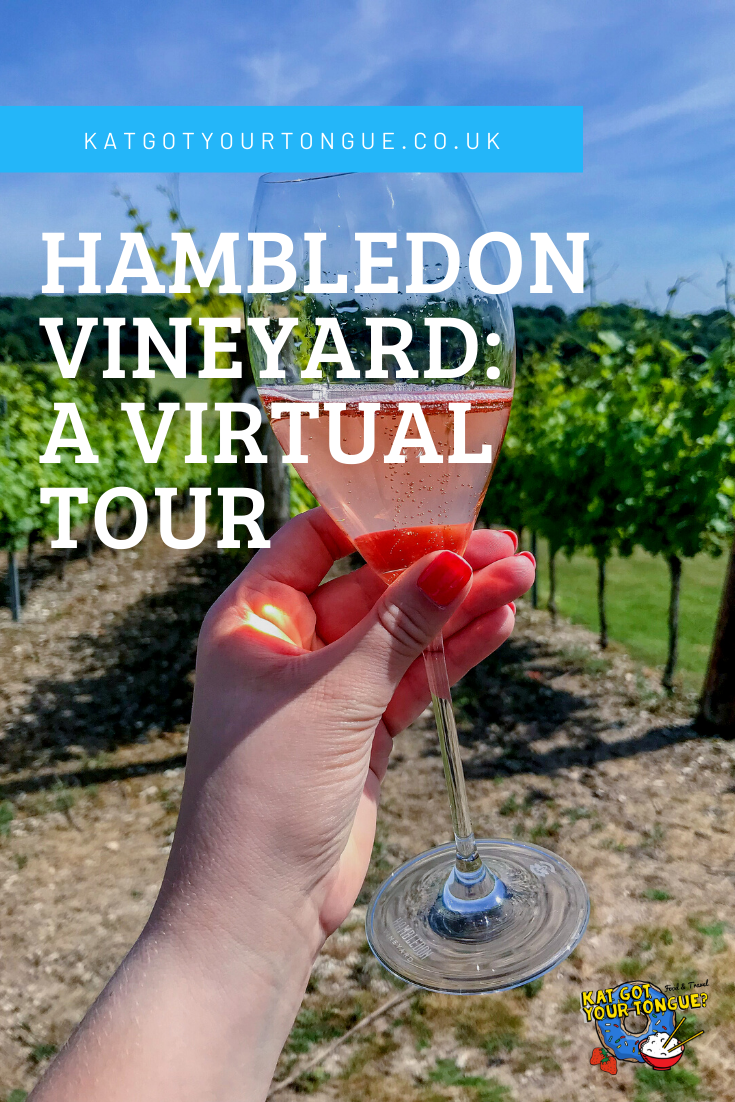
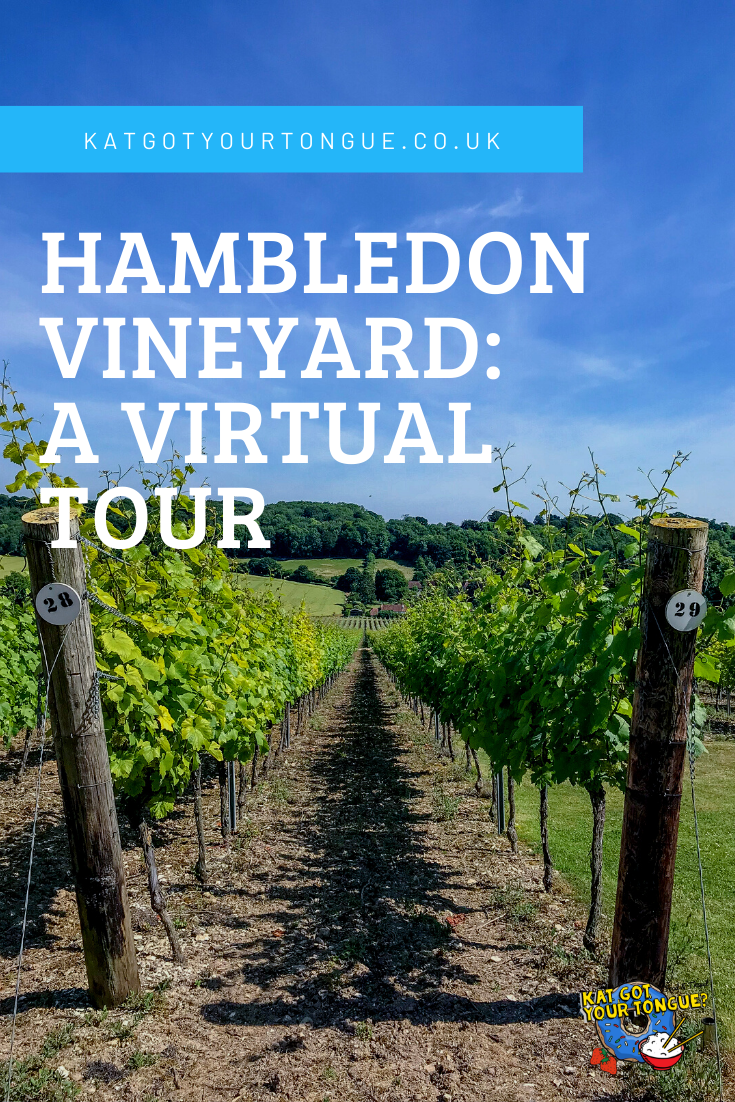
In honour of English Wine Week, I thought I’d share a virtual tour of my favourite Hampshire vineyard, Hambledon Vineyard. With all of this extra time at home, we’re currently unable to explore some of the fantastic places that Hampshire has to offer – so, I thought a virtual tour of a fantastic local vineyard would be a good bit of escapism. Of course, I hope you’ll visit in person when we’re able to! This vineyard is absolutely beautiful and the people who own & work in the vineyard are very friendly.
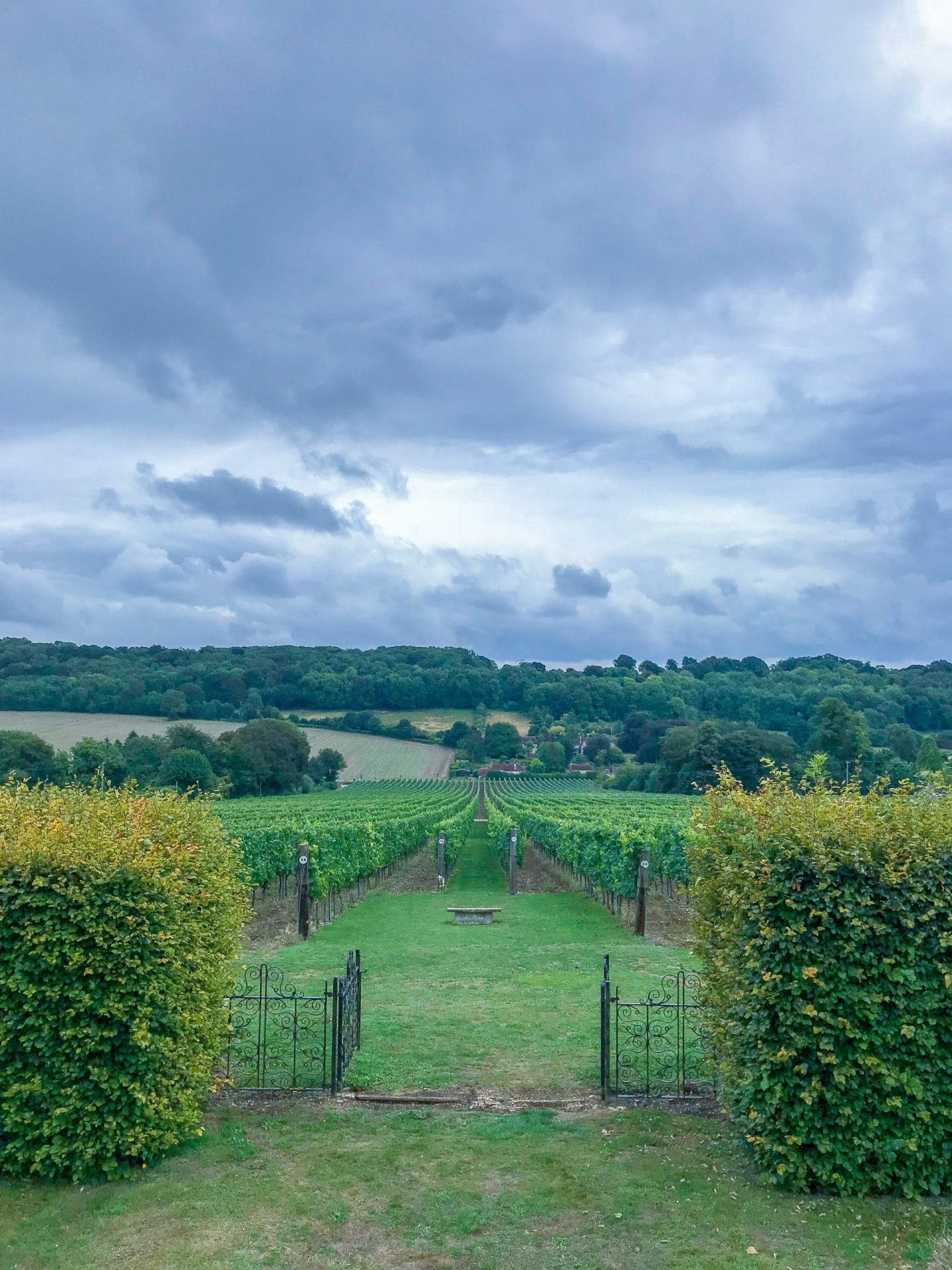
Hambledon Vineyard is nestled in the small Hampshire village of Hambledon, out in the countryside and in a beautifully rural setting. Hambledon Vineyard is actually England’s oldest commercial vineyard, today comprising over 200 acres across several vineyard sites. To this day, Hambledon remains a family-run vineyard, taken over by the current owners & residents in 1999 – and the vineyard has grown very successfully since then.
About Hambledon Vineyard
The oldest commercial vineyard in England, Hambledon Vineyard first started producing wines back in 1952. The Hambledon estate was taken over by the current owner, Ian Kellett, in 1999 and since then has expanded to over 200 acres with huge success.
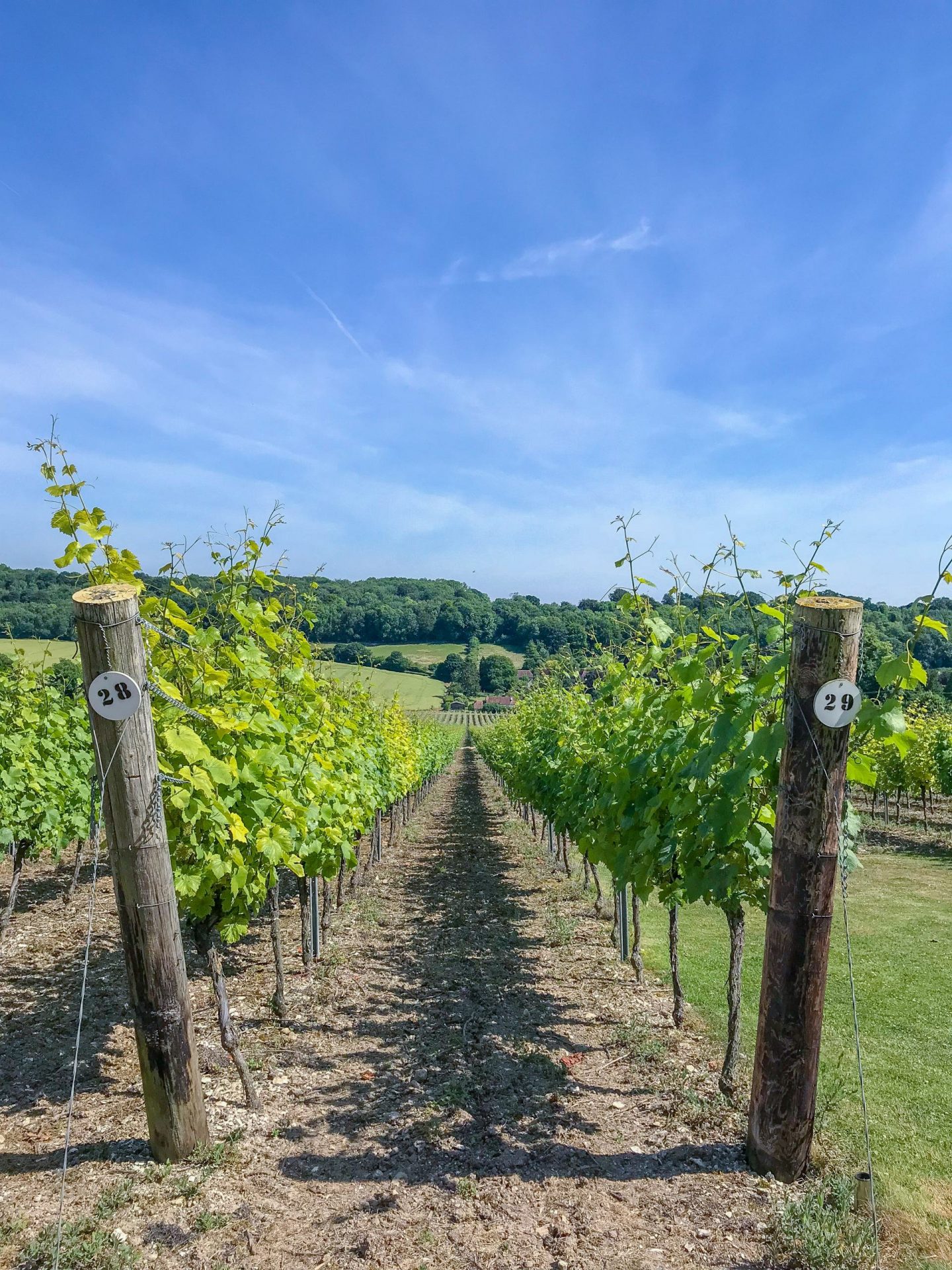
Located across rolling hills in the Hampshire countryside, the vineyard is fortunate to have plenty of chalk in their soil – the perfect subsoil for growing vines.
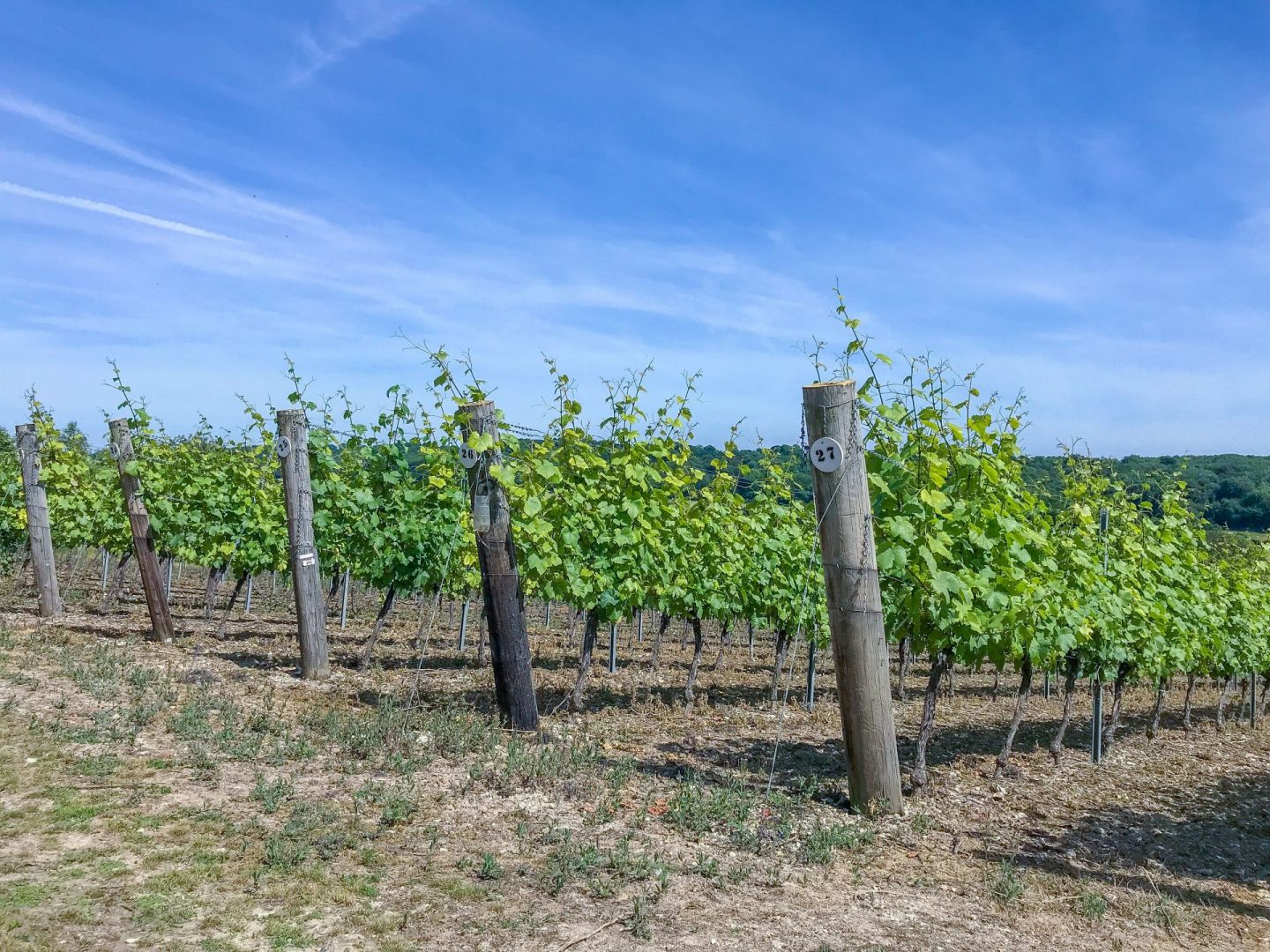
The three main vineyard sites are planted with Chardonnay, Pinot Noir & Pinot Meunier, which are the three main grape varieties normally used in the production of champagne. When wines using these grapes are produced – with a fizz – in England, however, they are called English Sparkling Wines. This is what Hambledon Vineyard excels in producing!
The vineyard is home to 100,000 vines, which are all pruned by hand – making each bottle of wine that you consume a real labour of love. Each September & October the grapes are picked, also by hand, and are transported to the onsite winery and presses – minimising the time between picking the grapes & pressing, and ensuring a high quality wine as a result.

The Winery
Hambledon has a compact, purpose-built winery onsite, which is currently undergoing some expansion works to create a larger underground cellar in the vineyard – which will allow them to increase their wine production capacity. Due to very popular demand!
I’ve been on a few tours of the winery – with each event at the vineyard, there is normally a quick tour to tie in with whatever activities you have booked. The onsite winery was opened in 2011, in time for the vineyard’s first harvest. The Hambledon winery is the only fully gravity-fed winery in the UK, allowing them to create their wines with as little intervention as possible.
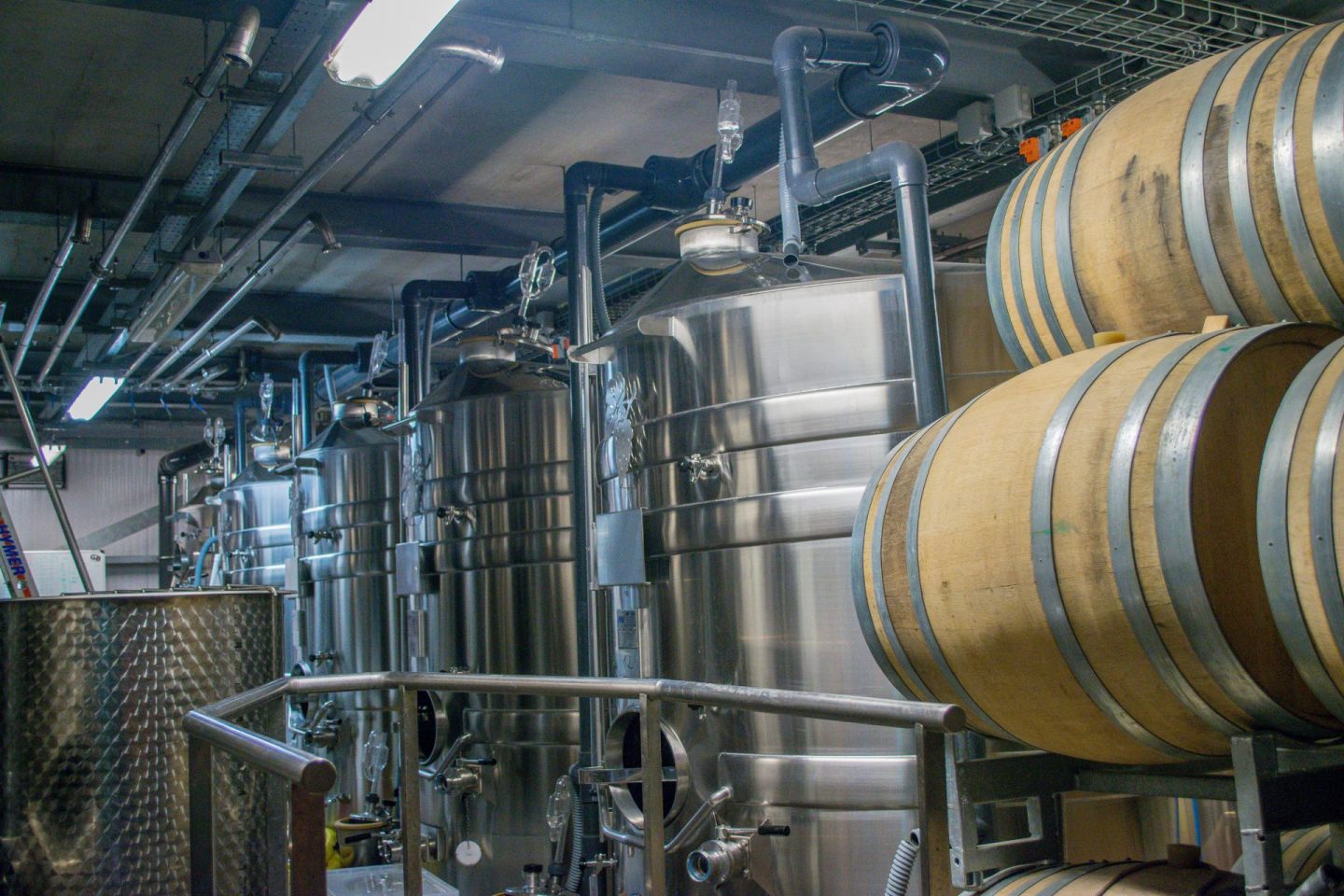
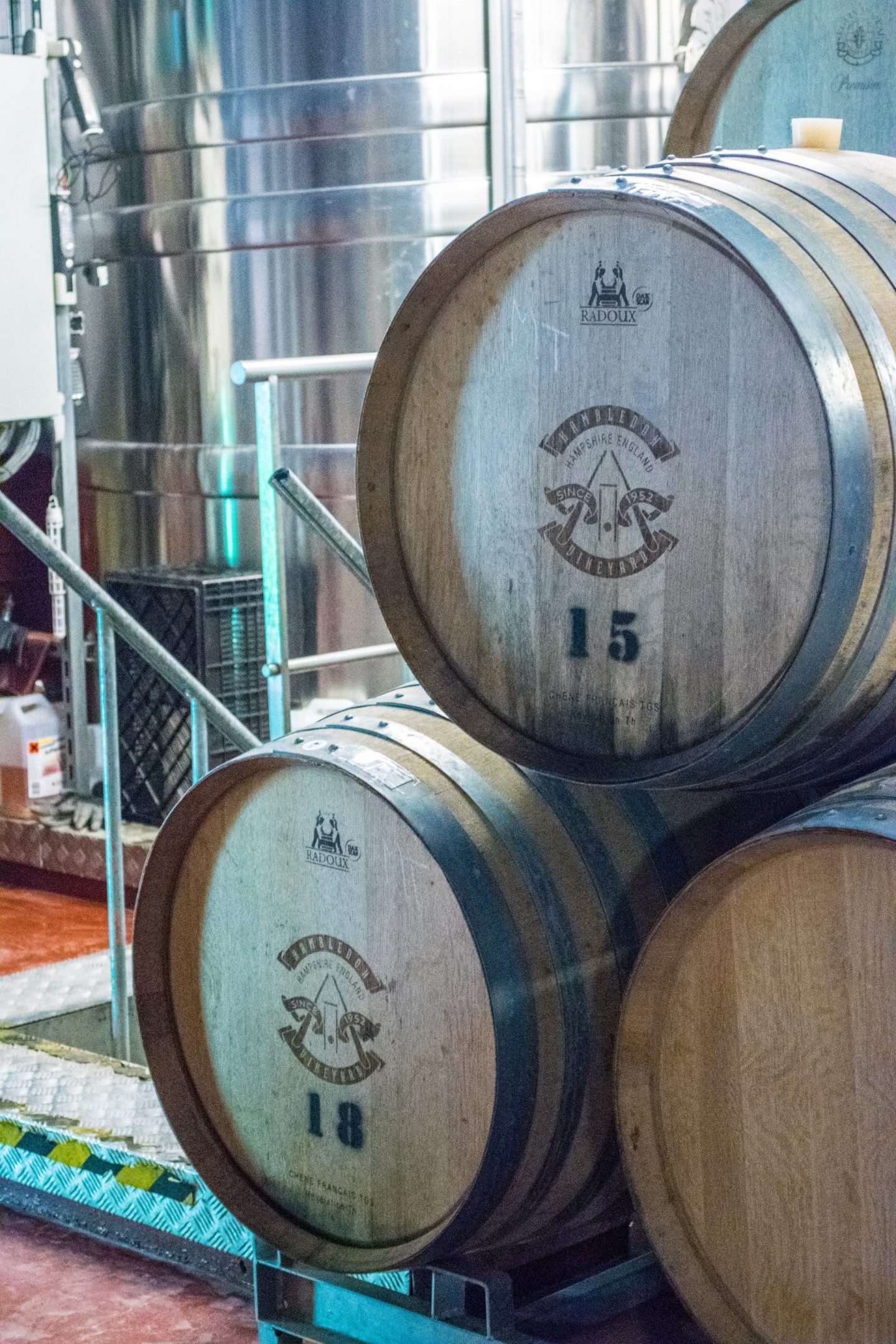
So how is this beautiful sparkling wine made? Here’s a run-down of the process:
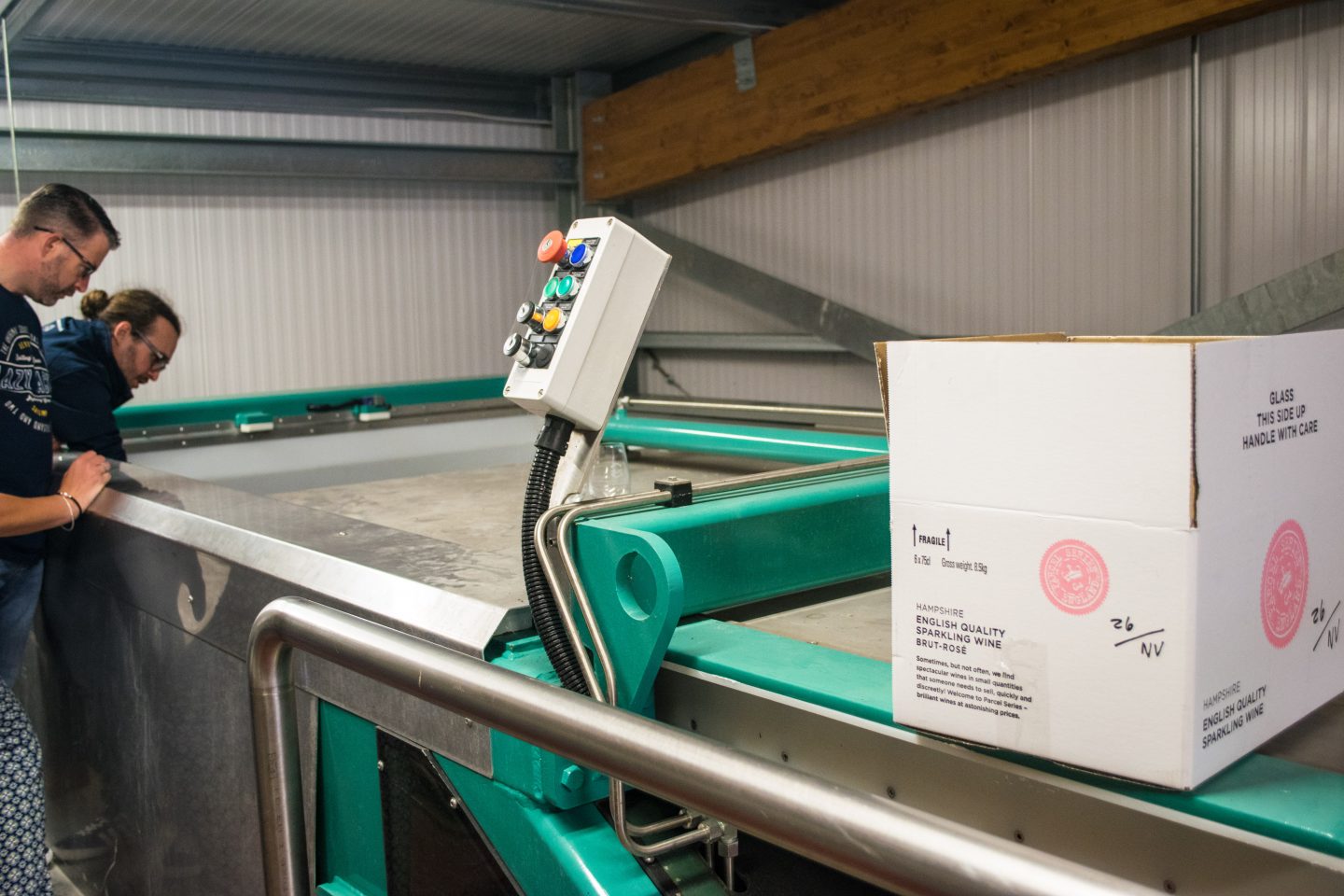
After the grapes are harvested, they’re loaded into the press (pictured below) by hand – so as to minimise any potential damage. These presses gently extract the juice from the grapes, separating the juice into two parts: the initial pressing (the Cuvée) and the end pressing (the Taille).
The juice from the grapes is then chilled in tanks for up to 24 hours, allowing the grape solids to settle at the bottom of the tanks – they can then be removed.
Alcoholic fermentation begins! Yeast is added to the juice, turning it into a dry, still wine. The yeast feeds on the natural sugars in the grape juice, creating alcohol and aromas.
Next comes the malolactic fermentation, where the malic acid in the wine is converted to lactic acid – softening the acidity of the wine and creating new aromas.
The wines are then left in their tanks on the ‘lees’, which is the dead yeast, for at least 6 months – to continue to gain flavour and complexity.
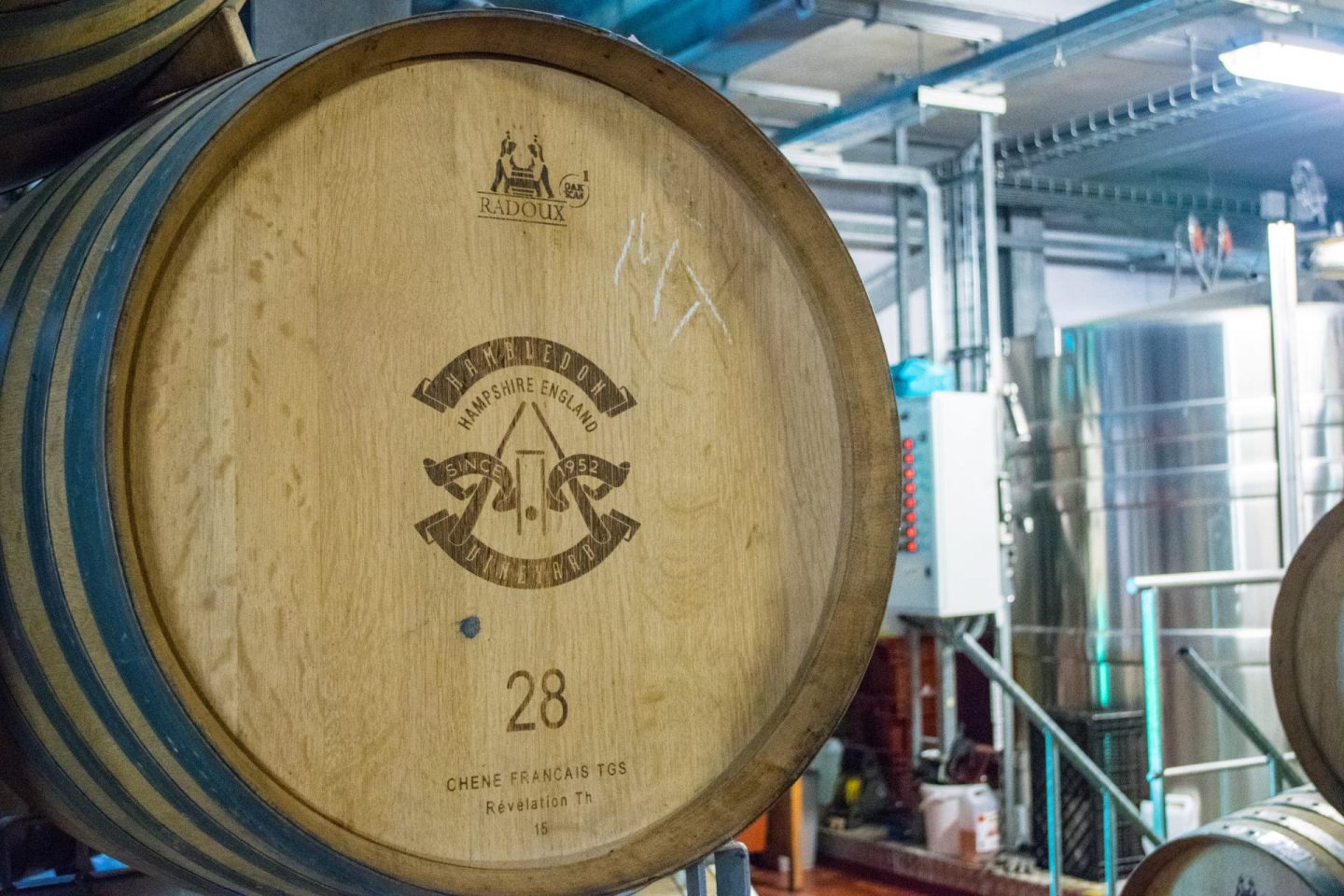
After 6 months, the wines are tasted separately over several weeks to decide which should be blended together to create each cuvée. Wines from previous harvests are used in the blending process alongside the newer wines, giving a broad spectrum of wines to use in creating the signature Hambledon cuvée flavours.
Yeast & sugar are added to the blended base wines during bottling to start off a second fermentation – this is the fermentation which produces the bubbles.
The second fermentation produces more alcohol alongside carbon dioxide, which cannot escape the bottle and therefore creates the bubbles. When this fermentation has finished, the yeast in the bottles slowly dies – bringing greater flavour & complexity to the wines. The ageing process begins – the length of time that the wine ages on the ‘lees’ in the bottles can range from 1 to 5 years.
Onto the final stages of making the wine! It’s a lengthy process, isn’t it?
Once the wine has aged, the dead yeast is removed by riddling & disgorging. The bottles are slowly turned upside down, allowing the yeast sediment to fall down into the neck of each bottle. The neck of each bottle is then put into a freezing brine, which creates an ice plug in the neck that traps the sediment. Opening the bottle then allows the pressure inside to expel the ice plug, removing the dead yeast.
Each bottle is then topped up with an aged wine & sugar solution, before being closed again with a cork and wire cage. The bottles can now be cleaned, labelled and sold!
A huge amount of time, love & effort is put into every bottle of Hambledon wine, from harvest to bottling – which is reflected in the flavour of the wine and (what I consider to be) the reasonable price.
Hambledon Wines
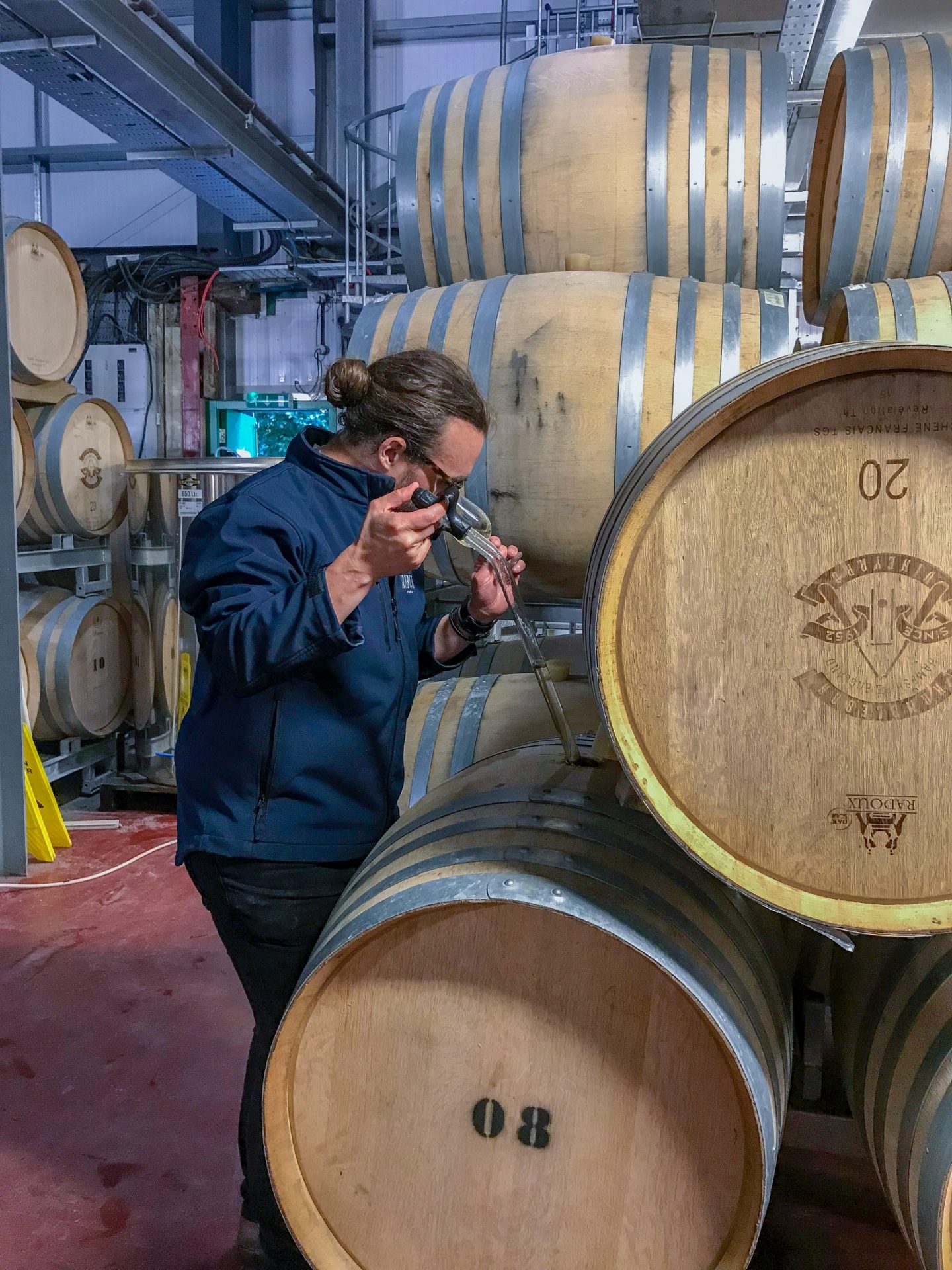
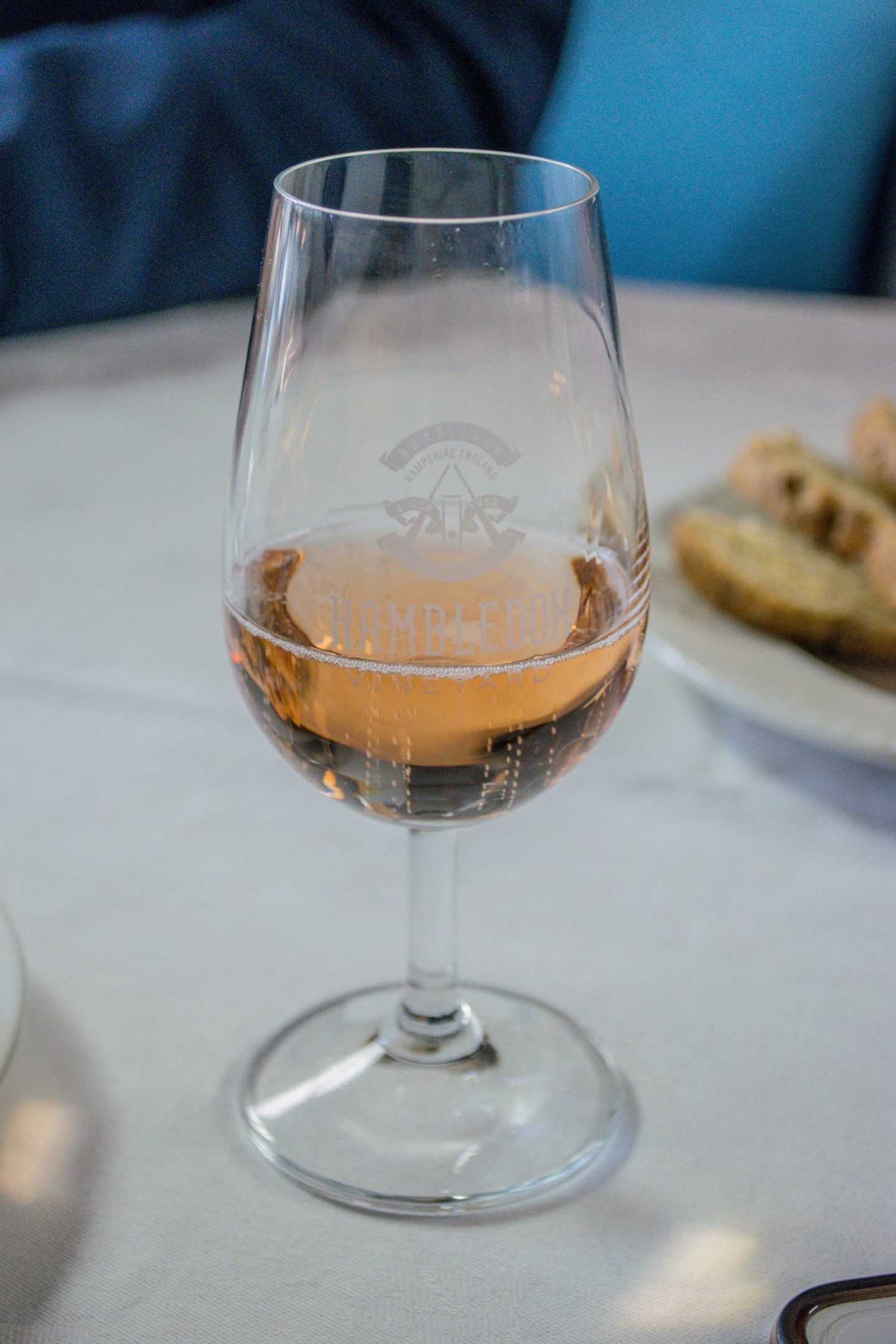
Hambledon Vineyard currently produce three sparkling wines as standard – the Classic Cuvée, Classic Cuvée Rosé & Premiere Cuvée. I have tasted all three (many times, actually! Hic…) and they all taste beautiful. It’s hard to choose a favourite – but for me, it is between the Classic Cuvée and the Classic Cuvée Rosé.
Considering the time-consuming and labour-intensive production of these wines, I think that the price per bottle is very reasonable. The bottles of cuvée mentioned above are priced at £30, £35 and £45 respectively – coming in at a similar price to many champagnes, but far more special & unique (and locally produced!) than a lot of the big-name champagnes.
The Classic Cuvée was the first English sparkling wine to be released from Hambledon Vineyard and everything about this wine is classic – from the beautiful flavours to the equally beautiful bottle. This wine is aged for a minimum of 22 months prior to dosage.
The Classic Cuvée Rosé is the first Rosé sparkling wine produced by Hambledon, launched for the first time in November 2016. I love a good sparkling Rosé and this is by far the best I’ve had – crisp and not too sweet, with delicate bubbles. Of course, the packaging is also beautiful. This wine is aged for a minimum of 14 months prior to dosage.
The Premiere Cuvée is an extra special blend, first released in 2015. This wine is delicate and full of complex flavours, a result of the ageing process which, for this wine, is a minimum of 36 months before dosage.
You can find all of the wines available on the Hambledon Vineyard website here. There are also several stockists across Hampshire, including Waitrose.


Hambledon Events
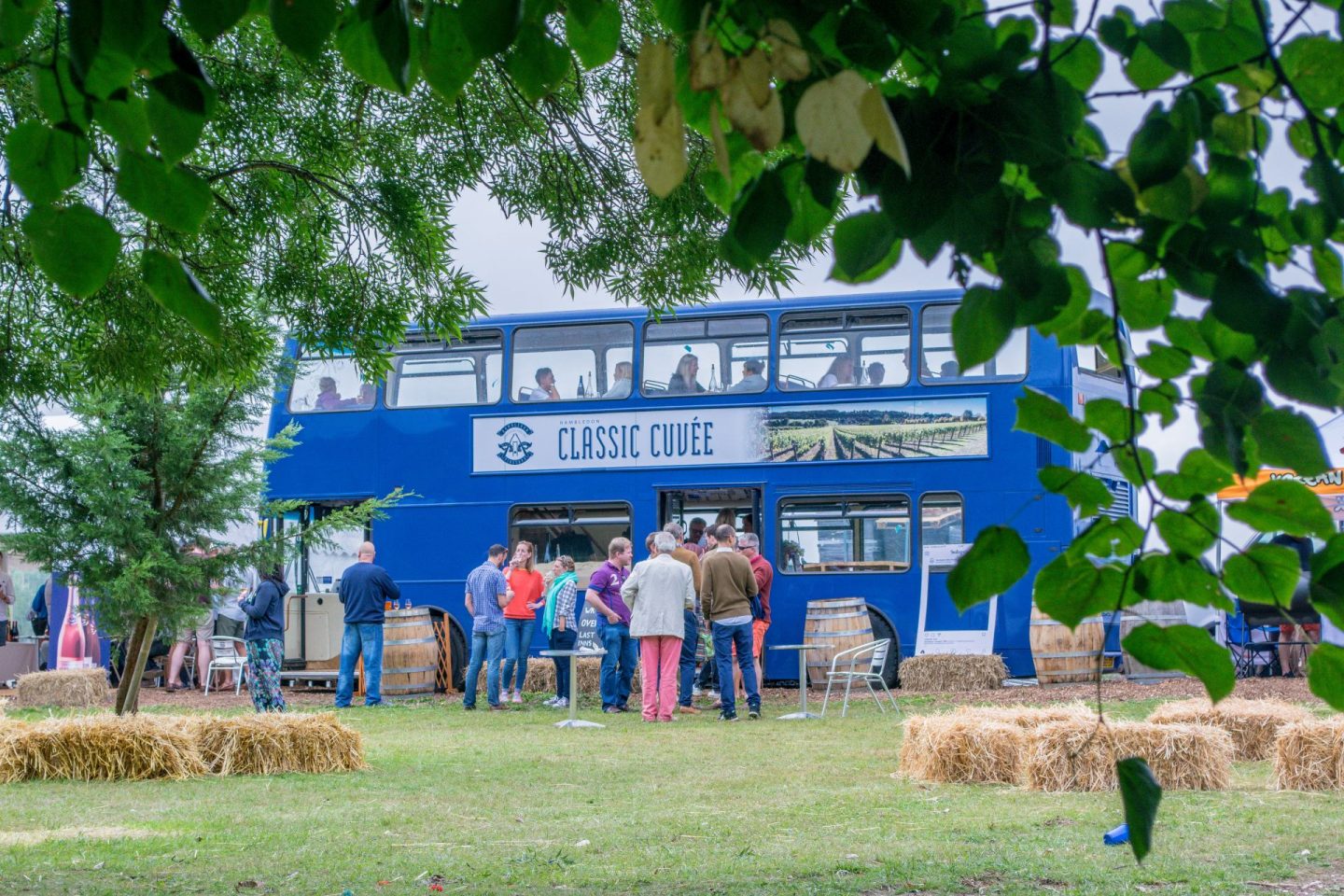
The vineyard hosts a fantastic range of events throughout the year, ranging from winery tours & tastings to festivals & winemaking events. Each of the events I’ve attended has been great fun, informative and – most of all – comes with a lot of English sparkling wine to sample! I’ve noticed that the Hambledon events are all very popular and get booked up rather quickly – so if there’s anything that takes your fancy, make sure to book well in advance!
Hambledon host a wine festival regularly, which I attended in 2017 and 2018 – this is a fun day out suitable for family & friends. The format of the festival varies each year, with a selection of local producers selling their goods, wine masterclasses, vineyard tours and of course plenty of wine.
You might like to read this post, An Afternoon of Sparkling Wine at the Hambledon Vineyard Wine Festival
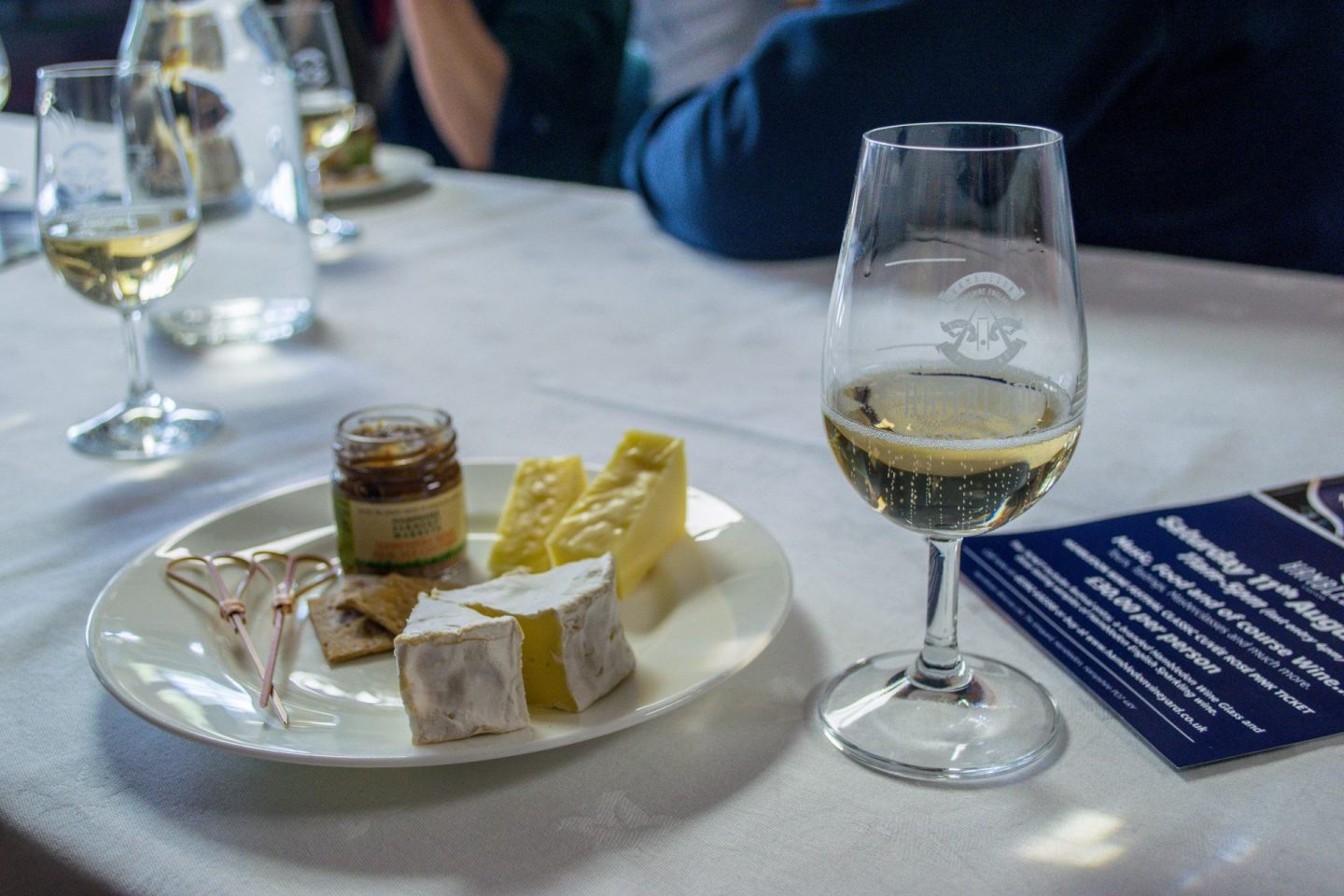
There are also plenty of cheese & wine tasting evenings throughout the year, of which I have attended two – one which featured the Hambledon sparkling wines and one which featured a selection of (non-Hambledon) riojas. Both of these events were very enjoyable and a great way to spend an evening! These events are typically around £32.50 per person.
A chocolate fan? There’s events for you, too! Hambledon hold regular chocolate & wine tasting evenings too, pairing local chocolates with the sparkling wines. I attended one of these events which featured chocolates from Winchester Cocoa Company, all of which were delicious – especially when washed down with excellent wine. These events typically start from £20 per person.

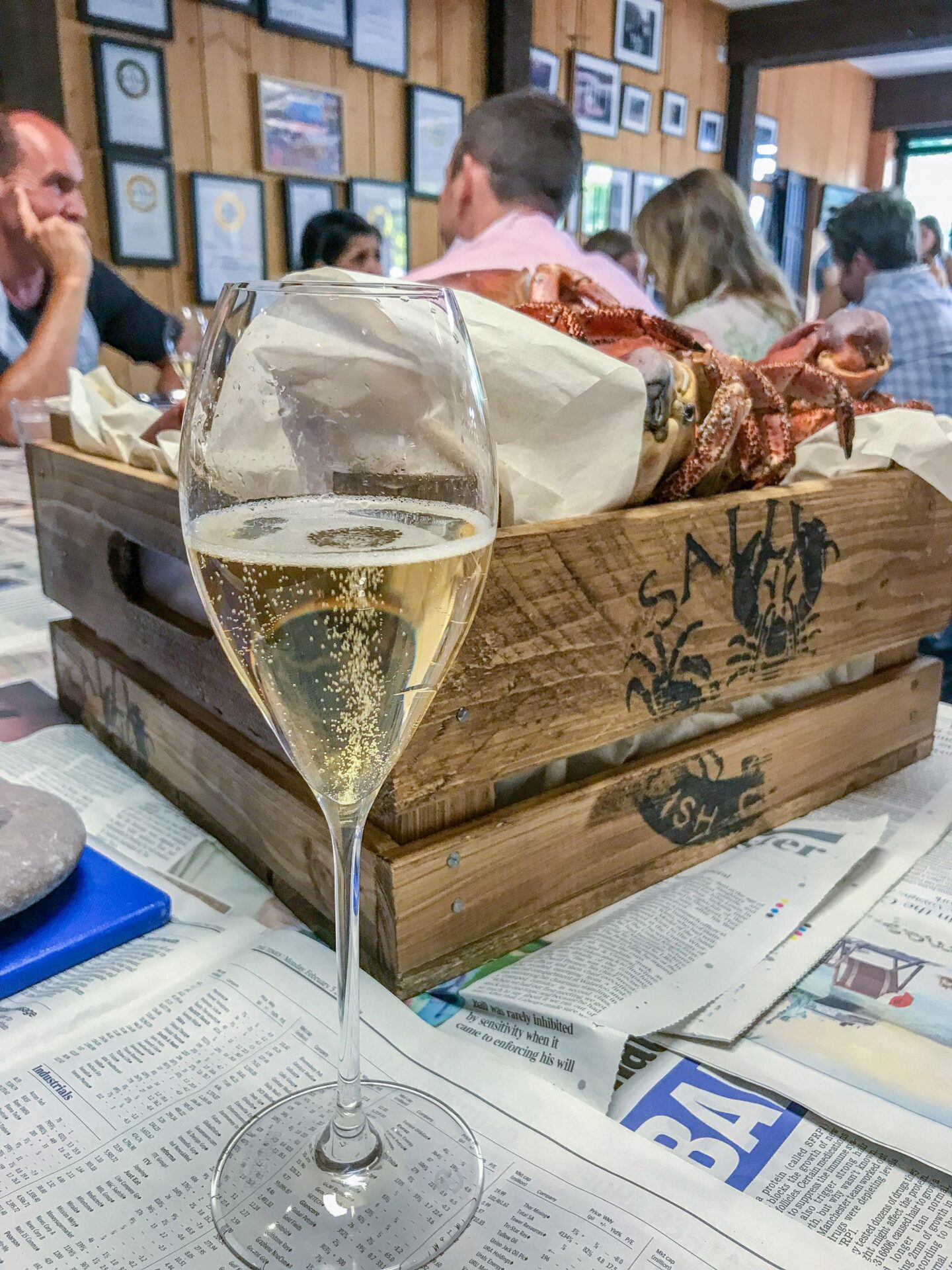
One of my favourite events (which is now a regular feature at Hambledon) was the Crab & Cuvée crab cracking workshop with Sally’s Fish Camp. This was a brilliant afternoon workshop, starting off with learning how to crack & prepare fresh Dorset crab (with a glass of Classic Cuvée to keep you company), a vineyard & winery tour and finishing off with an al fresco crab lunch in the vineyard. By far the most enjoyable afternoon I’ve spent at the vineyard, and a fantastic event to attend with friends. This event is a bit pricier, typically around £55 per person (and so worth it).
You might like to read this post, Crab & Cuveé at Hambledon Vineyard
So there we have it! I hope you’ve enjoyed this virtual tour of Hambledon Vineyard – it’s one of the most beautiful places in Hampshire, set in a rural village on the outskirts of Waterlooville.
I’d absolutely recommend visiting in person when you can – whether you’re local or not, Hambledon is most definitely worth the trip!
Visit the website here for more information on the wines, tours and events. Plus, if you fancy tasting some of the wines at home you can order some bottles to keep you going!